


5th Grader Quiz: Are You Smart
4.5106.00 Reviews
App Specs
- Version
- 11.0.4
- Updated On
- License
- Free
- Downloads
- 100,000+
- Developer
- KDR Games
- Categories
- Trivia
- Platform
- Android
Screenshots
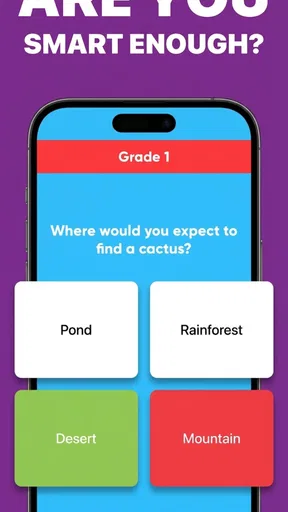
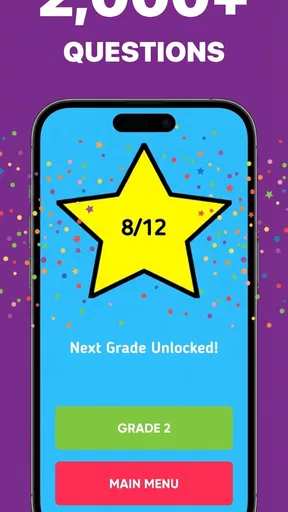
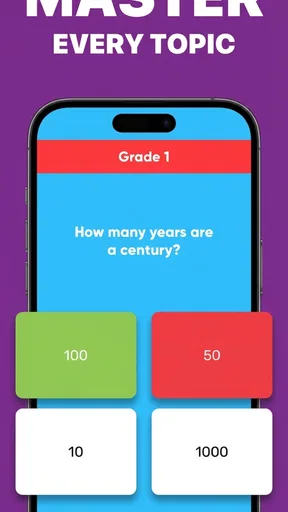
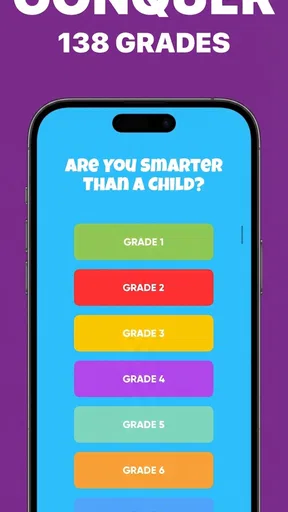
 Analysis by AppCompare
I downloaded 5th Grader Quiz: Are You Smart expecting a quick trivia distraction, and that is exactly where it makes its strongest first impression. It is a free general-knowledge game from KDR Games, built around the playful challenge of seeing whether everyday knowledge holds up against questions aimed at a fifth-grade level. The premise sounds simple, but it creates an immediate reason to start: you want to know whether the next question will be obvious, unexpectedly difficult, or embarrassing in a way that makes you laugh.
My first sessions felt best when I treated it as a short mental break rather than a serious study tool. I could open it, answer a few questions, and put it down without needing a long tutorial or a complicated setup. That low commitment is important because trivia games often lose people before the interesting part begins. Here, the central idea is clear almost immediately, and the familiar school-quiz framing gives each question a little more personality than a completely random collection of facts.
What keeps the quiz interesting beyond the first week
The game belongs to the trivia category, but its appeal is narrower and more specific than a broad quiz app that tries to cover every possible subject with competitive rankings or elaborate modes. The fifth-grade theme sets an expectation: questions should feel accessible, yet the wording or the subject can still expose gaps in memory. I found that contrast more enjoyable than questions that are simply obscure. It encourages a different kind of confidence, because knowing the general idea is not always enough when several answers look plausible.
That makes the first week particularly easy to enjoy. I could play while waiting for an appointment, during a short commute as a passenger, or at home when I wanted something more active than scrolling. A realistic use is a family challenge at the kitchen table: one person reads a question aloud, everyone answers before discussing it, and the group compares who was certain for the wrong reason. The game works well in that situation because the subject is broad enough for different ages to participate, while the school-level framing keeps the tone light.
Another useful habit is to answer before looking too closely at the choices. In multiple-choice trivia, recognizing the correct option after seeing it is not the same as knowing the answer. I get more value from the quiz when I pause for a second, form my own answer, and then use the choices as confirmation rather than as clues. This turns a casual round into a small recall exercise and makes the result more informative.
The game is also a decent conversation starter. A question about a familiar topic can lead to a quick explanation from someone who remembers it better, while a wrong answer can reveal how easily assumptions take over. I would not call that a formal learning system, but it is a practical way to make short sessions feel less disposable. If you play with another person, the quiz gains a social layer that is not as noticeable when you use it alone.
Its audience is broad. The content rating is Everyone, and the uncomplicated premise makes it suitable for casual players who do not want mature themes or an intense competitive environment. It can appeal to children who enjoy testing school knowledge, adults who like nostalgic quiz formats, and families looking for a simple shared activity. Still, the “fifth grader” idea should not be mistaken for a guaranteed educational curriculum. I see it as light practice in recall and general awareness, not as a replacement for a textbook, lesson plan, or subject-specific learning app.
Worth Reading Before You Choose

EA SPORTS FC Mobile 26 Is a Bigger Football Game, but It Takes Time

Flipboard Shows What News Apps Must Do Beyond the Feed

Switching to Android Auto Means Rethinking Your Driving Routine

Google Calendar Makes a Crowded Week Easier to Manage

Ludo King Makes the Most of the Minutes Between Plans

Baby Panda World Brings Quick Play to Modern Phones, but Its Game Library Feels Busy
Where the novelty begins to wear thin
The same simplicity that makes the opening sessions approachable can become the main limitation after the novelty fades. A general-knowledge quiz depends heavily on how much you enjoy its question pool and how often the experience gives you a reason to return. Once the initial challenge of proving yourself has passed, repeating the same style of activity may feel less rewarding, especially if you prefer games with a story, visible progression, or a steady stream of new mechanics.
I also noticed a familiar trivia problem: a wrong answer can feel more frustrating when the question seems easy. The title encourages you to expect that you should know the material, so misses may sting more than they would in a specialist quiz. That is part of the fun for some players, but it can also make the experience feel like a test rather than a relaxing break. If you already dislike being judged by general-knowledge questions, the playful framing may not fully remove that pressure.
For long-term use, I would not rely on the game as my only source of mental stimulation. Its best role is as one small option in a rotation. I might play it on one day, switch to a word puzzle on another, and return when I want a quick knowledge check. That approach protects it from becoming repetitive and gives the quiz a better chance of retaining its charm.
A second practical strategy is to change the purpose of each session. One time, I play quickly and trust my first instinct. Another time, I slow down and explain why each answer seems right or wrong. With a friend, we can keep score informally; alone, I can focus on questions that expose weak spots. These small changes do not create new game modes, but they make the existing format more flexible and help prevent automatic tapping.
How much effort it takes to keep using
The maintenance burden is low in the everyday sense. This is not an app that demands a complicated routine, extensive setup, or a large time commitment. I can pick it up after a gap without relearning controls or remembering a story. That matters for a casual trivia game: its strongest long-term quality is the ability to remain available as a lightweight option rather than becoming another obligation.
At the same time, low maintenance does not automatically mean high retention. The player has to supply the reason to return. There is no promise in the basic concept that every session will feel different, so the lasting value depends on whether you enjoy testing general knowledge repeatedly. If your interest comes mainly from the initial question of “am I smarter than a fifth grader?”, that curiosity may be satisfied quickly.
The free price makes experimentation easy. You can try it without making a financial commitment, which is useful when you are unsure whether this particular trivia style suits you. There are in-app purchases priced from $1.99 to $2.99 per item, so I would approach optional spending carefully and decide whether any purchase meaningfully improves your own routine before paying. For me, the sensible starting point is to use the free experience long enough to see whether I return naturally rather than buying something simply because the first sessions were entertaining.
One maintenance habit I recommend is setting a stopping point before beginning. Trivia can encourage “just one more” thinking, especially after a mistake, but a short planned session keeps it refreshing. I prefer ending after a handful of questions while I am still interested. That makes it easier to come back later and prevents the quiz from turning into background tapping.
The technical baseline is also worth noting for people using older devices. The current version is 11.0.4 and requires Android 7.0 or later. That gives the game a relatively accessible starting point for Android users who are not running the newest phone, although anyone with an older operating system should check compatibility before planning around it. The title is clearly positioned as a straightforward mobile game rather than a demanding visual production, which suits its quick-session purpose.
What can cause fatigue over several months
The first source of fatigue is predictability. General trivia has a limited emotional range: you read, decide, reveal, and move on. That loop is satisfying when the question feels fair and your answer carries a little tension, but it can flatten when every round follows the same rhythm. Players who need changing objectives may prefer a larger quiz platform with themed categories, live competition, or more substantial progression.
The second is the balance between confidence and difficulty. If too many questions land below your ability, the game becomes a routine confirmation rather than a challenge. If too many depend on details you have never encountered, success can feel arbitrary. The fifth-grade premise creates an appealing middle ground in theory, but individual experience will vary with background, age, and the subjects that happen to appear. I would judge it by whether the questions make you think without making you feel that the answer was hidden behind trivia knowledge for its own sake.
Another fatigue point is the limited usefulness of repeated mistakes if the game does not become part of a deliberate learning routine. Answering incorrectly can be memorable, but memory improves more when I stop to understand the correction. My practical workaround is to say the correct answer aloud and connect it to something familiar. That takes only a moment, yet it gives a wrong answer more value than simply tapping past it.
There is also a difference between playing alone and playing socially. Alone, the experience is convenient but can become passive. With family or friends, the same question can produce debate, jokes, and explanations, which extends its life. If you are considering the game for a household, I would treat it as a shared prompt rather than a formal competition. This reduces the pressure on younger players and keeps disagreements enjoyable instead of turning every answer into a verdict.
Compared with a dedicated educational app, this game is lighter and less structured. A learning app is usually the better choice when you want lessons, explanations, targeted practice, or measurable progress in one subject. Compared with a large trivia platform, this title is more focused and less overwhelming, but it may offer less variety for someone who wants constant novelty. Compared with a crossword or word game, it tests stored knowledge more directly and gives less room to reason your way through a problem.
Who should make room for it
I think it earns a place on an Android device for people who want a free, approachable trivia game that can be played in short bursts. It is especially suitable if you enjoy broad subjects, like comparing answers with other people, or want a casual activity that does not require learning a complex ruleset. The audience size suggests that the concept has found a real group of interested players: it has passed 100 thousand installs, with a 4.5 average from around 1.4 thousand ratings.
Those figures do not change the personal test that matters most: do you still open it after the first week? My own answer is yes, but with conditions. I would keep it as a rotating quick-play option, not as the one game I expect to occupy me every day. Its lasting value comes from convenience, social use, and the satisfaction of recalling something under a little pressure. It does not come from deep progression or an expanding sense of mastery.
I would skip it if you are looking for a serious academic tool, a story-driven game, fast action, or a highly competitive online environment. I would also be cautious if repeated general-knowledge testing makes you anxious or if you quickly tire of fixed question-and-answer loops. A category-focused quiz may serve you better when you want depth, while a more feature-rich trivia alternative may be preferable when variety is your main priority.
My long-term verdict
After the novelty fades, 5th Grader Quiz: Are You Smart survives because it is easy to understand and easy to revisit. That is not a dramatic strength, but it is a useful one. KDR Games has chosen a format that works in spare minutes, supports casual group play, and gives ordinary knowledge a playful test. The free entry point makes the decision simple, while the Everyone rating keeps its audience broad.
My recommendation is to install it if you want a small trivia companion rather than a complete entertainment system. Give it a week, then notice whether you are returning for the questions themselves or only because the original challenge has not been settled in your mind. If you enjoy changing your approach, discussing answers, and stopping before the loop becomes tiring, it can remain pleasant for months. If you need constant new content or a stronger sense of progression, you will probably move on.
For me, the game earns lasting space as a low-maintenance general-knowledge quiz, provided I use it intentionally. I would keep sessions short, answer before relying on the choices, explain mistakes instead of dismissing them, and occasionally bring another person into the round. Used that way, it offers more than a quick novelty without pretending to be something it is not: a friendly, repeatable trivia break with enough personality to return to, but not enough depth to replace every other kind of game.
Pros
- Covers core fifth-grade topics in short
- easy-to-finish rounds.
- Simple interface makes it accessible for younger players.
- Quick questions provide convenient practice during spare moments.
- Immediate answers help players recognize mistakes as they play.
- Light quiz format can make revision feel more like a game.
Cons
- Some questions may feel too easy for advanced fifth-grade students.
- Limited variety can make repeated sessions feel predictable.
- Ads may interrupt gameplay depending on the device and version.
- It may not explain why an incorrect answer is wrong.
- Quiz content may not match every school curriculum exactly.
FAQs for 5th Grader Quiz: Are You Smart
What is 5th Grader Quiz: Are You Smart?
5th Grader Quiz: Are You Smart is a trivia-style educational game built around questions commonly associated with elementary and middle-school subjects. It challenges players with topics such as mathematics, science, history, geography, language, and general knowledge. The app is designed to be entertaining while testing memory, reasoning, and how much basic school knowledge you still remember.
Is 5th Grader Quiz: Are You Smart suitable for children?
The game can be suitable for children who are comfortable reading questions independently, as well as teenagers and adults looking for a casual knowledge challenge. However, parents should review the app’s age rating, advertising, privacy information, and any available in-app purchase settings before installation. Some questions may be easy for younger players, while others can require careful reading and broader general knowledge.
Does the game require an internet connection to play?
The availability of offline play may depend on the version of the application and the device being used. Basic quiz sessions may work without a continuous connection if the required question content is already stored on the device, but internet access can still be necessary for downloading the app, displaying advertisements, updating content, or using online features. Checking the store description is recommended before relying on offline access.
Is 5th Grader Quiz: Are You Smart free to download and play?
The game may be available as a free download, but free access does not always mean that every feature is completely unrestricted. Many quiz apps support themselves through advertisements, optional purchases, or premium upgrades that remove ads or unlock additional content. Before starting, review the listing for current pricing, in-app purchase details, and parental controls, especially if children will be playing on the device.
What can players expect from the quiz gameplay?
Players can generally expect short rounds of multiple-choice questions covering school subjects and general knowledge. The main goal is to select the correct answer before moving to the next challenge, with progress often reflected through scores, levels, or results screens. Difficulty can vary, so the game works well for quick solo sessions, friendly competitions, and nostalgic challenges between family members or friends.


